<?xml version="1.0" encoding="utf-8"?><feed xmlns="http://www.w3.org/2005/Atom" ><generator uri="https://jekyllrb.com/" version="3.10.0">Jekyll</generator><link href="https://cheil.github.io/feed.xml" rel="self" type="application/atom+xml" /><link href="https://cheil.github.io/" rel="alternate" type="text/html" /><updated>2026-07-14T09:00:37+00:00</updated><id>https://cheil.github.io/feed.xml</id><title type="html">Heil Group - Computational Material Design @ TU Graz</title><subtitle>Webpage</subtitle><author><name>Christoph Heil</name></author><entry><title type="html">Paper published in Physical Review B</title><link href="https://cheil.github.io/blog/2026/new-paper-tion/" rel="alternate" type="text/html" title="Paper published in Physical Review B" /><published>2026-07-14T00:00:00+00:00</published><updated>2026-07-14T00:00:00+00:00</updated><id>https://cheil.github.io/blog/2026/new-paper_TiON</id><content type="html" xml:base="https://cheil.github.io/blog/2026/new-paper-tion/"><![CDATA[<p>We are excited to announce that our paper <a href="https://doi.org/10.1103/cjgd-fjh2">Quantum disorder engineering in superconducting Ti(O,N) thin films</a> has been published in <em>Physical Review B</em>.</p>

<p>Titanium monoxide (TiO) and titanium nitride (TiN) are two closely related rock-salt superconductors that sit at opposite ends of a disorder spectrum: TiO is riddled with intrinsic vacancies and superconducts only below <em>T</em><sub>c</sub> ≈ 0.5 K, while clean TiN reaches <em>T</em><sub>c</sub> ≈ 6 K. Bridging the two, our experimental collaborators grew high-crystalline-quality titanium oxynitride Ti(O,N) films by nitric-oxide-assisted molecular beam epitaxy, using nitrogen substitution for oxygen as an anion-engineering knob to tune the material continuously between the oxide and the nitride.</p>

<p>The film with TiO<sub>0.6</sub>N<sub>0.4</sub> stoichiometry superconducts at <em>T</em><sub>c</sub> ≈ 2.5 K, comfortably above pure TiO but well below TiN. Strikingly, the measured <em>T</em><sub>c</sub> as a function of anion ratio departs sharply from the trend expected from density-functional-theory and Eliashberg-equation calculations for the ideal ordered compounds—a clear sign that something beyond the average electronic structure is at play.</p>

<p>That something is disorder. Across the whole series, the normal-state resistivity follows the Mooij correlation, a hallmark of strongly disordered, amorphous-like metals. Our analysis shows that the disorder in TiO originates from stoichiometric titanium and oxygen vacancies, and that substituting more than about 10% nitrogen for oxygen suppresses vacancy formation while introducing only moderate chemical disorder on the anion sublattice.</p>

<p>On the theory side, our first-principles calculations make the mechanism visible. Unfolding the electronic band structures of quasirandom supercells reveals how coherence is progressively destroyed: the spectral weight of vacancy-laden Ti<sub>0.9</sub>O<sub>0.9</sub> is heavily washed out across the Brillouin zone, TiO<sub>0.6</sub>N<sub>0.4</sub> sits at an intermediate level of incoherence, and stoichiometric TiN retains sharp, coherent bands. Anion chemistry thus provides a direct handle on the quantum coherence of the Cooper pairs, establishing titanium oxynitrides as a clean model system in which stoichiometry, disorder, and superconductivity can be dialed in by design.</p>

<p>Read the full paper at <a href="https://doi.org/10.1103/cjgd-fjh2">doi.org/10.1103/cjgd-fjh2</a>.</p>

<p><img src="../../../assets/theme/images/TiON_paper.png" width="1000" /></p>]]></content><author><name>Christoph Heil</name></author><summary type="html"><![CDATA[Quantum disorder engineering in superconducting Ti(O,N) thin films]]></summary></entry><entry><title type="html">New preprint announcement</title><link href="https://cheil.github.io/blog/2026/new-preprint-srtivo3/" rel="alternate" type="text/html" title="New preprint announcement" /><published>2026-07-09T00:00:00+00:00</published><updated>2026-07-09T00:00:00+00:00</updated><id>https://cheil.github.io/blog/2026/new-preprint_SrTiVO3</id><content type="html" xml:base="https://cheil.github.io/blog/2026/new-preprint-srtivo3/"><![CDATA[<p>We are pleased to announce the submission of our latest preprint to arXiv, titled <a href="https://arxiv.org/abs/2607.07067">Ab initio thermodynamic statistical modeling of the miscibility gap and the metal–insulator transition in SrTi<sub>1-x</sub>V<sub>x</sub>O<sub>3</sub></a>.</p>

<p>SrTiO<sub>3</sub> is a textbook band insulator, while SrVO<sub>3</sub> is a moderately correlated metal. Substituting vanadium for titanium in the solid solution SrTi<sub>1-x</sub>V<sub>x</sub>O<sub>3</sub> therefore offers a clean knob to tune a material continuously between the two, and experiments indeed see a composition-driven metal–insulator transition (MIT). The details, however, have stubbornly resisted a clean theoretical picture: reported critical concentrations scatter across <em>x</em><sub>c</sub> ≈ 0.4–0.7, and the mechanism sits at the complicated intersection of Mott physics and disorder-induced (Anderson) localization.</p>

<p>Part of the problem is methodological. Previous first-principles studies had to commit to a single supercell at each composition. But at a given <em>x</em> there are many symmetry-inequivalent arrangements of V and Ti on the cation lattice, and they can have markedly different electronic properties. A real, thermally disordered solid solution is not any one of these configurations—it is an ensemble of many of them, populated according to temperature. Picking one cell, even the lowest-energy one, quietly throws that physics away.</p>

<p>In this work, we tackle the alloy within the generalized quasichemical approximation (GQCA), a thermodynamically consistent framework in which every quantity is computed as an ensemble average over all symmetry-inequivalent clusters, weighted by occurrence probabilities that minimize the Gibbs mixing free energy. This gives a well-defined recipe for averaging over supercells and puts the structural and electronic descriptions on an equal footing.</p>

<p>From the mixing thermodynamics we obtain a miscibility gap with a critical temperature of 1443 K, consistent with the limited experimental evidence for high-temperature solubility and subsequent decomposition, and substantially larger than earlier cluster-expansion estimates. Coupling the cluster ensemble to dynamical mean-field theory (DMFT) then lets us track the density of states at the Fermi level across the whole composition range. The contrast is striking: plain density-functional theory predicts a metal for <em>every</em> <em>x</em> &gt; 0, whereas the correlated spectral function reproduces the transition, evolving from insulating below <em>x</em> ≈ 0.3 to metallic near <em>x</em> = 1. Finally, classifying each cluster as metallic or insulating and running site percolation on a simple cubic lattice yields a sharp onset of system-spanning conduction near <em>x</em> ≈ 0.4.</p>

<p>Together these results provide a unified, <em>ab initio</em> picture of the MIT in SrTi<sub>1-x</sub>V<sub>x</sub>O<sub>3</sub>, and—perhaps more importantly—a thermodynamically consistent, configuration-averaged framework that should carry over to the broader class of correlated materials in which substitutional disorder governs, or even drives, electronic transitions.</p>

<p>We’re excited to share this work and look forward to the community’s feedback!</p>

<p>Check out the preprint <a href="https://arxiv.org/abs/2607.07067">arXiv:2607.07067</a>.</p>

<p><img src="../../../assets/theme/images/SrTiVxO3_preprint.png" width="700" /></p>]]></content><author><name>Christoph Heil</name></author><summary type="html"><![CDATA[Ab initio thermodynamic statistical modeling of the miscibility gap and the metal–insulator transition in SrTi1-xVxO3]]></summary></entry><entry><title type="html">New preprint announcement</title><link href="https://cheil.github.io/blog/2026/new-preprint-nb-surface/" rel="alternate" type="text/html" title="New preprint announcement" /><published>2026-06-01T00:00:00+00:00</published><updated>2026-06-01T00:00:00+00:00</updated><id>https://cheil.github.io/blog/2026/new-preprint_Nb_surface</id><content type="html" xml:base="https://cheil.github.io/blog/2026/new-preprint-nb-surface/"><![CDATA[<p>We are pleased to announce the submission of our latest preprint to arXiv, titled <a href="https://arxiv.org/abs/2606.02730">Anharmonic lattice dynamics and superconductivity in strained bulk and surface niobium</a>.</p>

<p>Niobium is the workhorse of superconducting technology. From radio-frequency cavities in particle accelerators to superconducting qubits and single-photon detectors, Nb and its compounds underpin much of our quantum technological infrastructure. Yet a surprisingly basic question remains open: how exactly do strain and crystallographic surface orientation shape <em>T</em><sub>c</sub> at the microscopic level? Experiments on thin films and surfaces hint at strong sensitivity to these factors, but a unified first-principles picture has been lacking.</p>

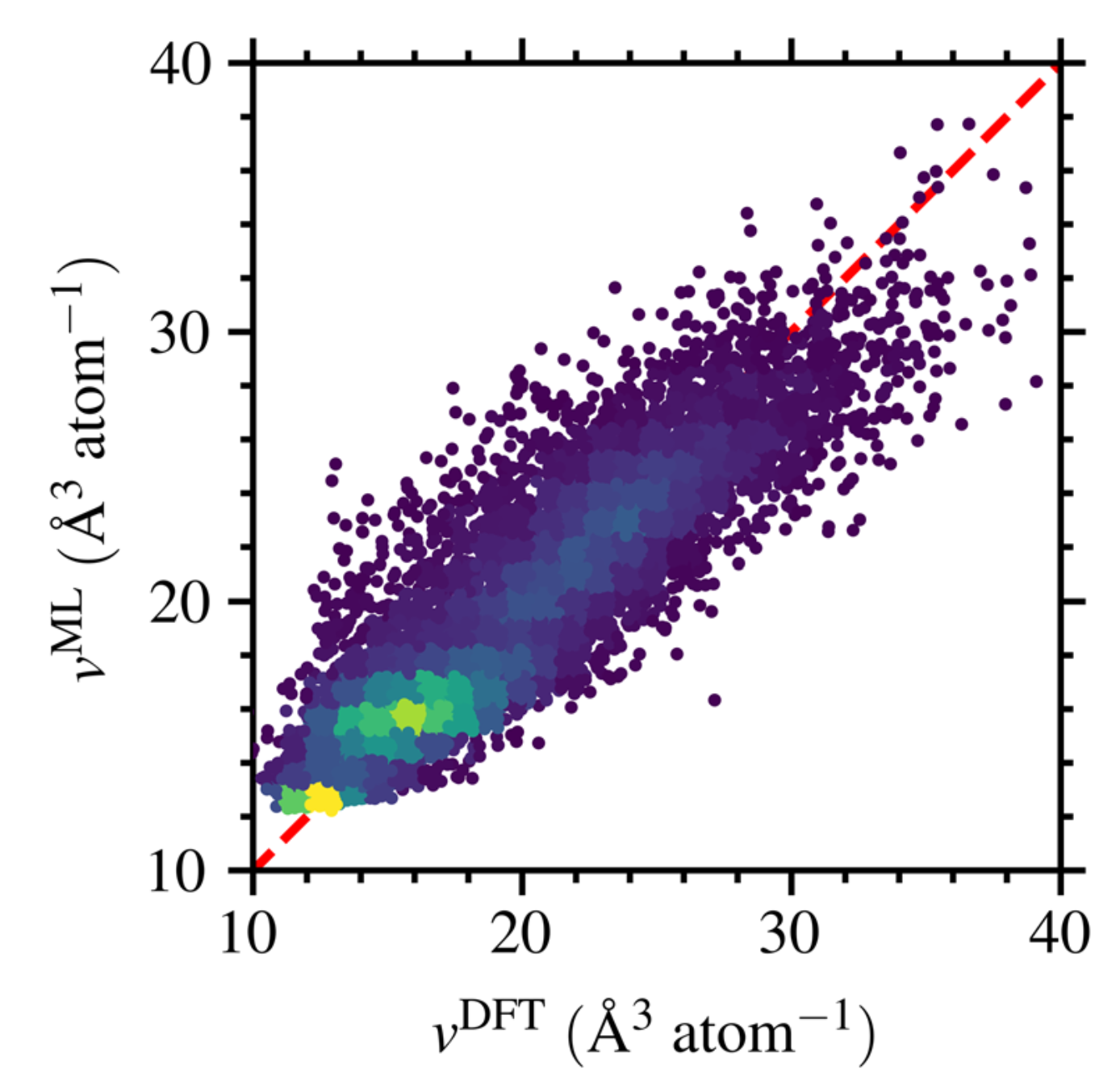
<p>In this work, we tackle both questions using state-of-the-art <em>ab initio</em> methods combined with isotropic Migdal–Eliashberg theory. For bulk Nb, we show that tensile strain is a remarkably effective lever: by systematically expanding the lattice up to ~6%, phonon softening drives a dramatic increase in the electron–phonon coupling constant, pushing <em>T</em><sub>c</sub> from 9.5 K at equilibrium all the way to 14.5 K—a more than 50% enhancement. The functional derivative δ<em>T</em><sub>c</sub>/δα<sup>2</sup><em>F</em>(ω) reveals why: tensile strain progressively shifts phonon spectral weight toward the optimal pairing energy scale, making the coupling not just stronger but spectrally better targeted.</p>

<p>The surface perspective is even richer—and computationally more demanding. For the three low-index terminations Nb(001), Nb(110), and Nb(111), harmonic phonon calculations immediately run into trouble: all three slabs exhibit imaginary modes, signaling that anharmonic lattice effects are not optional but essential. To treat these efficiently, we trained Nb-specific machine-learning interatomic potentials on first-principles bulk and slab configurations and used them to accelerate stochastic self-consistent harmonic approximation (SSCHA) calculations. The anharmonically renormalized phonon spectra are fully stabilized and reveal a clear orientation dependence of superconductivity: Nb(001) exhibits the strongest electron–phonon coupling (λ = 1.1) and a <em>T</em><sub>c</sub> of 10.0 K, while Nb(110) and Nb(111) show progressively reduced pairing strength down to 6.0 K. This constitutes a concrete, testable prediction for surface-sensitive probes such as tunneling spectroscopy on well-characterized single-crystal Nb surfaces.</p>

<p>Across both the strain and surface studies, the spectral distribution of the electron–phonon coupling turns out to matter as much as its total strength, a message with direct implications for engineering superconducting properties in Nb-based devices, where surface preparation, crystallographic quality, and residual strain are all experimental handles.</p>

<p>We’re excited to share this work and look forward to the community’s feedback!</p>

<p>Check out the preprint <a href="https://arxiv.org/abs/2606.02730">arXiv:2606.02730</a>.</p>

<p><img src="../../../assets/theme/images/Nb_preprint_fig2.png" width="1000" /></p>]]></content><author><name>Christoph Heil</name></author><summary type="html"><![CDATA[Anharmonic lattice dynamics and superconductivity in strained bulk and surface niobium]]></summary></entry><entry><title type="html">Welcome Luka Wibmer</title><link href="https://cheil.github.io/blog/2026/new-phd/" rel="alternate" type="text/html" title="Welcome Luka Wibmer" /><published>2026-04-01T00:00:00+00:00</published><updated>2026-04-01T00:00:00+00:00</updated><id>https://cheil.github.io/blog/2026/new-phd</id><content type="html" xml:base="https://cheil.github.io/blog/2026/new-phd/"><![CDATA[<p>We are delighted to welcome <strong>Luka Wibmer</strong> to the group as a PhD student.</p>

<p>Luka comes to us from Markus Aichhorn’s group here at Graz University of Technology, where he completed his Master’s project on correlated metals. So while he is no stranger to the institute — or to the kind of many body thinking that underlies much of what we do — we are very glad to have him join our side of it.</p>

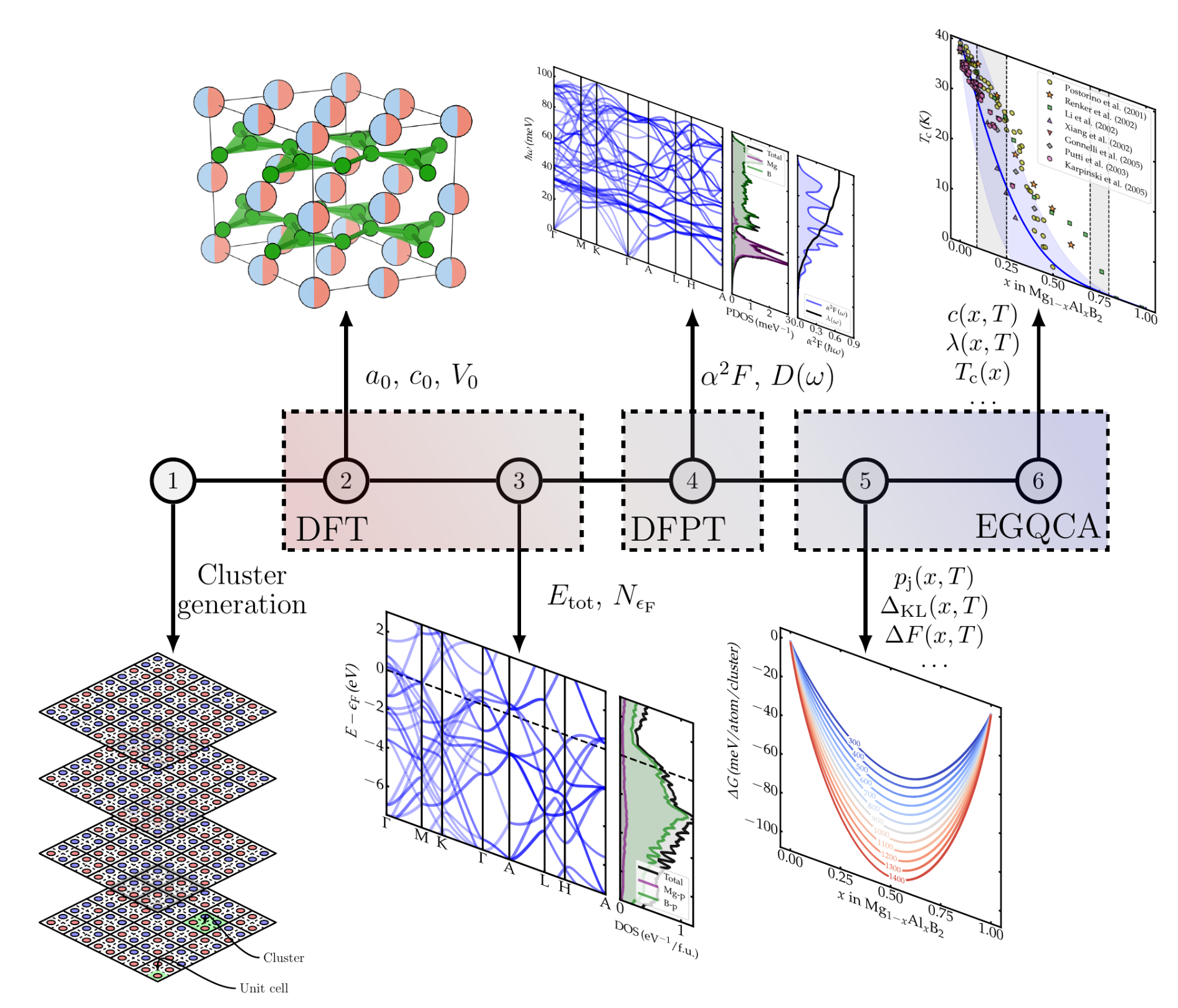
<p>In our group, Luka will work on alloy superconductors as part of our <a href="https://cheil.github.io/blog/2025/new-project-alloyssc/">FWF project on superconductivity in alloys</a>. His focus will be on developing and applying the extended generalized quasichemical approximation (EGQCA) — a framework for modeling the electronic and superconducting properties of disordered alloys from first principles, going beyond idealized ordered structures toward a realistic description of compositional disorder. This connects directly to open questions about how alloying shapes the pairing interaction and <em>T</em><sub>c</sub> in conventional superconductors.</p>

<p>Luka officially joined the group on April 1st, 2025, and we are looking forward to what he will bring.</p>

<p>Welcome, Luka!</p>]]></content><author><name>Christoph Heil</name></author><summary type="html"><![CDATA[New PhD student joins the group]]></summary></entry><entry><title type="html">Two new preprints</title><link href="https://cheil.github.io/blog/2026/new-preprint-ultrafast/" rel="alternate" type="text/html" title="Two new preprints" /><published>2026-03-20T00:00:00+00:00</published><updated>2026-03-20T00:00:00+00:00</updated><id>https://cheil.github.io/blog/2026/new-preprint_ultrafast</id><content type="html" xml:base="https://cheil.github.io/blog/2026/new-preprint-ultrafast/"><![CDATA[<p>We are delighted to announce the simultaneous submission of two closely linked preprints to arXiv, representing
a major joint effort between our group at Graz University of Technology and our collaborators at MIT’s Research
Laboratory of Electronics.</p>

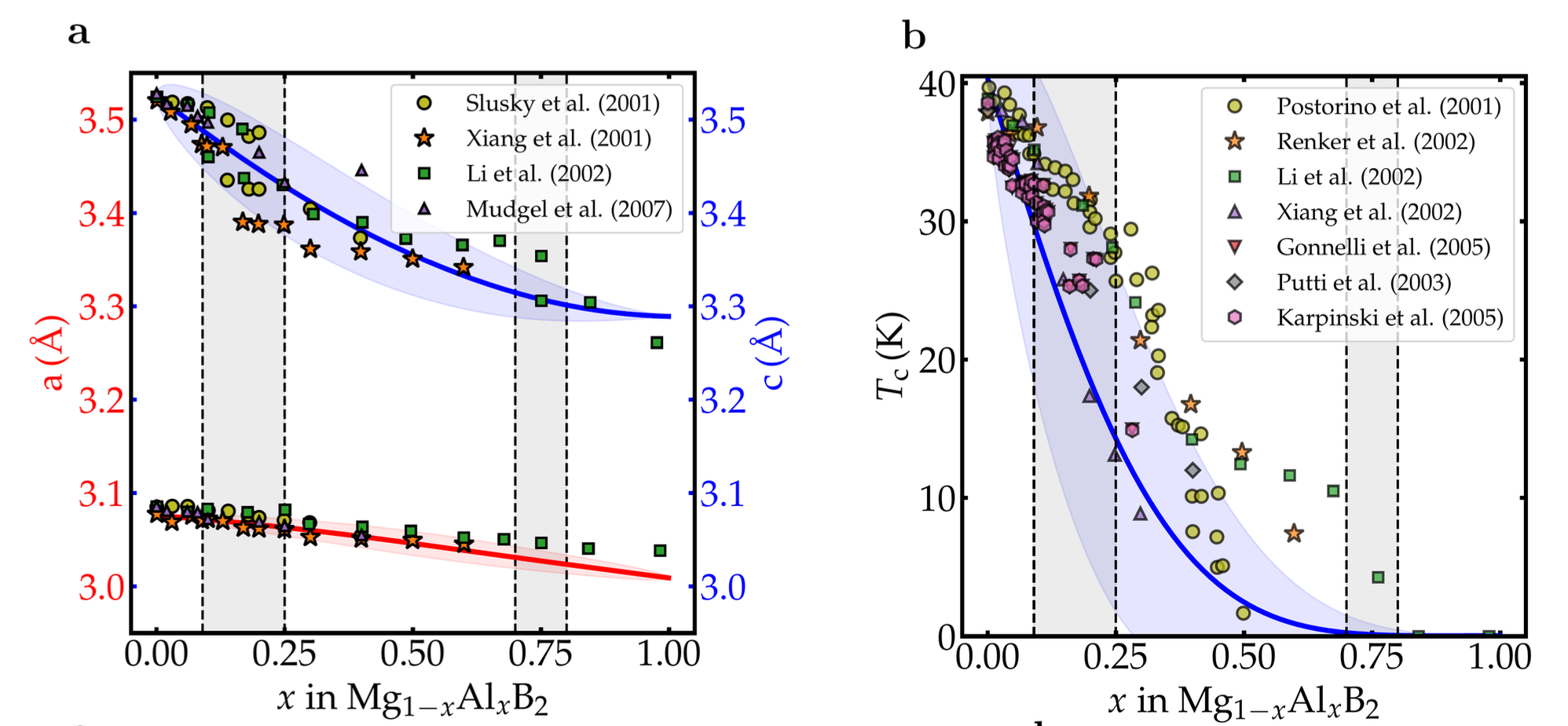
<p>The first, <a href="https://arxiv.org/abs/2603.18182">Ultrafast dynamics and light-induced superconductivity from first principles</a>,
develops a predictive <em>ab initio</em> framework for the nonequilibrium response of optically driven superconductors.
The second, <a href="https://arxiv.org/abs/2603.18199">Fast Real-Axis Eliashberg Calculations: Full-bandwidth solutions beyond the constant density of
states approximation</a>, provides the critical methodological engine that makes
the first possible. Together, these works open a new chapter in the first-principles description of conventional
superconductors driven far from equilibrium.</p>

<hr />

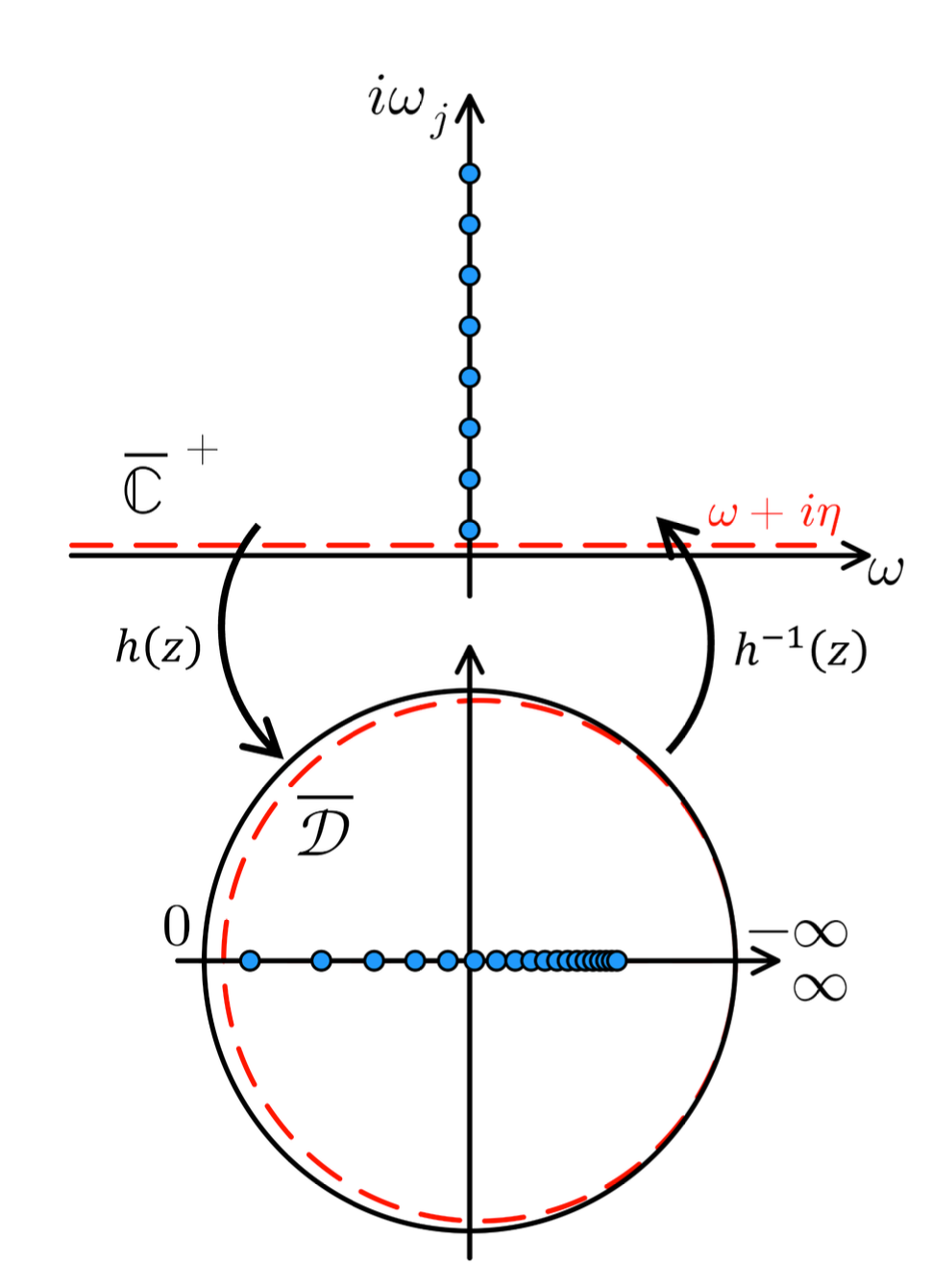
<h3 id="the-methodological-foundation-solving-migdal-eliashberg-theory-directly-on-the-real-frequency-axis">The methodological foundation: solving Migdal-Eliashberg theory directly on the real-frequency axis</h3>

<p>Nearly all experimentally accessible properties of a superconductor, such as tunneling spectra, optical
conductivity, and quasiparticle lifetimes, are real-frequency quantities. Yet the Migdal-Eliashberg equations,
the gold standard for <em>ab initio</em> strong-coupling superconductivity, are almost universally solved on the
imaginary-frequency (Matsubara) axis and then analytically continued to real frequencies. Analytic continuation
is an ill-conditioned inverse problem that amplifies numerical errors, blurs spectral features, and becomes
increasingly unstable at low temperatures, precisely where the physics is most interesting.</p>

<p>In <a href="https://arxiv.org/abs/2603.18199">arXiv:2603.18199</a>, we bypass this bottleneck entirely. We present a
practical and efficient scheme to solve the finite-temperature Migdal-Eliashberg equations <em>directly</em> on the
real-frequency axis, while retaining the full energy dependence of the electronic density of states. Most
existing real-axis implementations sacrifice this in favour of a constant density of states approximation.
A key algorithmic contribution is a reformulation of the integral kernel K(ω,ω’) that reduces the
computational cost from the conventional O(N<sup>2</sup>) to O(N), enabling high-resolution solutions to
converge in milliseconds (in the constant density of states case) to minutes (with the full variable density of states)
on a standard laptop.</p>

<p>We demonstrate the importance of going beyond the constant density of states approximation on H<sub>3</sub>S,
the archetypal high-<em>T</em><sub>c</sub> hydride. H<sub>3</sub>S hosts a prominent van Hove singularity near the
Fermi level that induces strong particle-hole asymmetry. Our full-bandwidth real-axis solution yields a
zero-temperature superconducting gap of 2Δ ≈ 60 meV, in close agreement with recent tunneling
measurements, while the constant density of states approximation overshoots at 75 meV. The direct
real-frequency solutions also display fine spectral structure inherited from α<sup>2</sup>F(ω) that
is irretrievably lost in analytically continued results, and they remain numerically stable across the entire
temperature range from millikelvin to above <em>T</em><sub>c</sub>.</p>

<hr />

<h3 id="the-physics-ultrafast-dynamics-and-photo-induced-superconductivity-from-first-principles">The physics: ultrafast dynamics and photo-induced superconductivity from first principles</h3>

<p>Armed with this fast real-axis solver, <a href="https://arxiv.org/abs/2603.18182">arXiv:2603.18182</a> constructs the
first fully self-consistent, first-principles framework for the nonequilibrium response of conventional
superconductors to ultrafast optical excitation. The approach couples a set of kinetic equations for the
quasiparticle distribution f(E,t) and the phonon distribution n(ω,t), an extension of the
Chang-Scalapino equations to the strong-coupling regime, solved self-consistently with the Migdal-Eliashberg
equations on the real-frequency axis. All material-specific inputs, including the Eliashberg spectral function
α<sup>2</sup>F(ω) and the phonon density of states, are computed from density functional (perturbation)
theory. The optical response of the driven film is then obtained from the time-dependent complex conductivity
via a Kubo formula, and the Maxwell equations are solved to yield the differential reflectance
ΔR/R<sub>0</sub> and differential transmission −ΔT/T<sub>0</sub> for direct comparison
with pump-probe experiments.</p>

<p>We validate the framework quantitatively on two conventional superconductors that could hardly be more
different: Pb at ambient pressure, with its soft phonon spectrum and modest coupling, and LaH<sub>10</sub>
at 165 GPa, where superconductivity is driven by stiff hydrogen vibrations and reaches <em>T</em><sub>c</sub> ≈ 250 K.
For Pb, the temperature-dependent amplitude and recovery time of −ΔT/T<sub>0</sub> agree
quantitatively with experiments. For LaH<sub>10</sub>, the model captures the multi-timescale relaxation
dynamics and the onset of a phonon bottleneck at higher fluences. This cross-material consistency across
vastly different phonon energy scales and coupling strengths confirms the robustness of the approach.</p>

<hr />

<h3 id="explaining-and-predicting-photo-induced-superconductivity">Explaining and predicting photo-induced superconductivity</h3>

<p>With validation in hand, we turn to the problem that has captivated the community for over a decade:
<em>photo-induced superconductivity</em>. In the alkali-doped fulleride K<sub>3</sub>C<sub>60</sub>, mid-infrared
pump pulses at 170 meV have been reported to induce signatures of superconductivity at temperatures far above
the equilibrium <em>T</em><sub>c,0</sub> ≈ 20 K, but the underlying mechanism has remained controversial.</p>

<p>Our calculations, using electron-phonon inputs computed with FHI-aims, reproduce a prominent peak in
α<sup>2</sup>F(ω) at 170 meV, precisely the energy targeted by the pump in the experiments.
Replicating the experimental conditions, we obtain a transient photo-induced gap Δ<sub>0</sub>(t) &gt; 0
at temperatures well above <em>T</em><sub>c,0</sub>, persisting briefly after the pump is switched off. This
photo-induced state emerges entirely within the framework of conventional electron-phonon-mediated
superconductivity. Resonant excitation of quasiparticles to energies matching the peak in
α<sup>2</sup>F(ω) depletes the gap-edge population and enhances pairing, in close analogy to the
long-known enhancement of superconductivity under microwave irradiation. The mechanism is therefore not exotic;
it is a natural consequence of the phonon spectrum.</p>

<p>Crucially, this analysis reveals a general design principle. Materials with prominent high-frequency structure
in α<sup>2</sup>F(ω) are candidate systems for photo-induced superconductivity. Guided by this
insight, we identify calcium-intercalated graphite, CaC<sub>6</sub>, as a promising new candidate and predict
a photo-induced gap response comparable to that of K<sub>3</sub>C<sub>60</sub> when pumped resonantly at its
characteristic phonon frequency, a prediction that is directly testable with existing ultrafast spectroscopy
equipment.</p>

<hr />

<p>These two works are deeply intertwined. The fast real-axis Eliashberg solver is not merely a convenience for
the nonequilibrium calculations; it is a necessity. Updating the full Migdal-Eliashberg solution at each time
step of the kinetic equations would be prohibitive with traditional imaginary-axis methods that require analytic
continuation. Our linear-scaling real-axis approach reduces this to a tractable computation, transforming a
formally intractable problem into a practical tool for materials prediction.</p>

<p>We believe these results establish a new baseline for the theoretical study of driven superconductors, and we
look forward to seeing how the community applies and extends this framework, particularly toward the long-standing
goal of light-enhanced or even room-temperature superconductivity.</p>

<p>Check out the preprints at <a href="https://arxiv.org/abs/2603.18182">arXiv:2603.18182</a> and
<a href="https://arxiv.org/abs/2603.18199">arXiv:2603.18199</a>.</p>

<p><img src="../../../assets/theme/images/ultrafast_Fig1.png" width="1000" /></p>]]></content><author><name>Christoph Heil</name></author><summary type="html"><![CDATA[First-principles framework for ultrafast dynamics and light-induced superconductivity in conventional superconductors]]></summary></entry><entry><title type="html">Paper published in PNAS</title><link href="https://cheil.github.io/blog/2026/new-paper-perspective/" rel="alternate" type="text/html" title="Paper published in PNAS" /><published>2026-03-09T00:00:00+00:00</published><updated>2026-03-09T00:00:00+00:00</updated><id>https://cheil.github.io/blog/2026/new-paper_perspective</id><content type="html" xml:base="https://cheil.github.io/blog/2026/new-paper-perspective/"><![CDATA[<p>We are pleased to share that our Perspective article <a href="https://doi.org/10.1073/pnas.2520324123">The path to room-temperature superconductivity: A programmatic approach</a> has been published in <em>PNAS</em>.</p>

<p>Room-temperature superconductivity remains one of the central open problems in condensed-matter physics. In this article, we argue that there is no fundamental physical law forbidding superconductivity at ambient temperature, and we outline a coordinated research strategy for making systematic progress toward that goal.</p>

<p>The paper identifies two grand challenges. The first is the <strong>Prediction Challenge</strong>: although first-principles methods for superconductivity have advanced rapidly, many theoretically promising compounds remain difficult or impossible to synthesize in practice. We therefore argue that the field should move beyond predicting critical temperatures alone and place greater emphasis on predictive thermodynamics, synthesis modeling, and high-throughput computational screening of experimentally realizable materials.</p>

<p>The second is the <strong>Engineering Challenge</strong>: superconductivity can be modified and enhanced by external and structural tuning knobs such as pressure, nanostructuring, and light, but our ability to predict and control these effects is still limited. We discuss how such knobs can be used to design and optimize superconducting states more deliberately, including through the broader concept of quantum metamaterials.</p>

<p>A central message of the article is that progress will require theory and experiment to be linked in a tight feedback loop. Modern <em>ab initio</em> simulations, realistic materials modeling, machine learning, and data-driven approaches now make it possible to explore the vast space of candidate materials and tuning strategies much more efficiently than before.</p>

<p>Recent experimental advances underline why this is a timely moment for the field. As highlighted in the related coverage of the paper, a companion study in the same issue reports pressure-quenched Hg-1223 with superconducting transition temperatures of up to 151 K at ambient pressure, illustrating how engineered pathways may open new routes toward higher-temperature superconductivity.</p>

<p>This publication is a call for a coordinated, interdisciplinary effort across physics, chemistry, and materials science to move the search from isolated breakthroughs toward a more systematic program.</p>

<p>Read the full article at <a href="https://doi.org/10.1073/pnas.2520324123">doi.org/10.1073/pnas.2520324123</a>.</p>

<p>The paper was also featured in the news, including by <a href="https://phys.org/news/2026-03-room-temperature-superconductor-scientists-agenda.html">Phys.org</a> and <a href="https://science.apa.at/power-search/4518526008118783769">APA Science</a>.</p>

<p><img src="../../../assets/theme/images/PNASperspective.png" width="1000" /></p>]]></content><author><name>Christoph Heil</name></author><summary type="html"><![CDATA[The path to room-temperature superconductivity - A programmatic approach]]></summary></entry><entry><title type="html">Welcome Ralf Meyer</title><link href="https://cheil.github.io/blog/2026/new-postdoc/" rel="alternate" type="text/html" title="Welcome Ralf Meyer" /><published>2026-03-02T00:00:00+00:00</published><updated>2026-03-02T00:00:00+00:00</updated><id>https://cheil.github.io/blog/2026/new-postdoc</id><content type="html" xml:base="https://cheil.github.io/blog/2026/new-postdoc/"><![CDATA[<p>We are delighted to welcome <strong>Ralf Meyer</strong> to the group as a postdoctoral researcher.</p>

<p>Ralf comes to us from Andreas Hauser’s group at Graz University of Technology, where he also did his PhD, focusing on machine learning based local structure search. In between, he spent time as a postdoc in the <a href="https://hjkgrp.mit.edu">Kulik group at MIT</a>, working on automated geometry optimization of transition metal complexes, force field development, and data-driven discovery — with a strong emphasis on combining electronic structure theory with machine learning. So while he is not new to Graz, we are glad to have him join our corner of it.</p>

<p>In our group, Ralf will work on two closely connected fronts. The first is the realistic modeling of materials from first principles — pushing toward a more faithful description of the systems we actually study, rather than idealized model structures. The second is developing and applying ML-based methods and other state-of-the-art approaches to go beyond the limitations of conventional <em>ab initio</em> frameworks, both in terms of system size and predictive accuracy.</p>

<p>We are looking forward to what he will bring to the group — both the expertise and the fresh perspective.</p>

<p>Welcome, Ralf!</p>]]></content><author><name>Christoph Heil</name></author><summary type="html"><![CDATA[New postdoc joins the group]]></summary></entry><entry><title type="html">New preprint announcements</title><link href="https://cheil.github.io/blog/2026/new-preprint-mg2irh7-srpdh3/" rel="alternate" type="text/html" title="New preprint announcements" /><published>2026-02-27T00:00:00+00:00</published><updated>2026-02-27T00:00:00+00:00</updated><id>https://cheil.github.io/blog/2026/new-preprint_Mg2IrH7_SrPdH3</id><content type="html" xml:base="https://cheil.github.io/blog/2026/new-preprint-mg2irh7-srpdh3/"><![CDATA[<p>We are pleased to announce two new preprints on arXiv that showcase a core theme of our research: <strong>using first-principles theory to guide the discovery and interpretation of superconductivity in hydrides</strong>, in close partnership with experiment.</p>

<p>In both projects, our group performed <strong>computational work</strong>, while the <strong>synthesis and experimental characterization were led by Tim Strobel’s team at Carnegie</strong>, including high-pressure/low-pressure synthesis and a suite of structural and physical-property measurements. The result is a tight theory–experiment loop: calculations propose targets and mechanisms; experiments test, refine, and uncover the real materials landscape.</p>

<h2 id="1-high-pressure-stabilization-of-mg2irh7--charting-a-path-toward-high-tc-mg2irh6">1) High-pressure stabilization of Mg<sub>2</sub>IrH<sub>7</sub> — charting a path toward high-<em>T</em><sub>c</sub> Mg<sub>2</sub>IrH<sub>6</sub></h2>

<p>Preprint: <strong><a href="https://arxiv.org/abs/2602.23675">High-pressure stabilization of Mg<sub>2</sub>IrH<sub>7</sub>: Structural proximity to high-<em>T</em><sub>c</sub> superconductivity</a></strong></p>

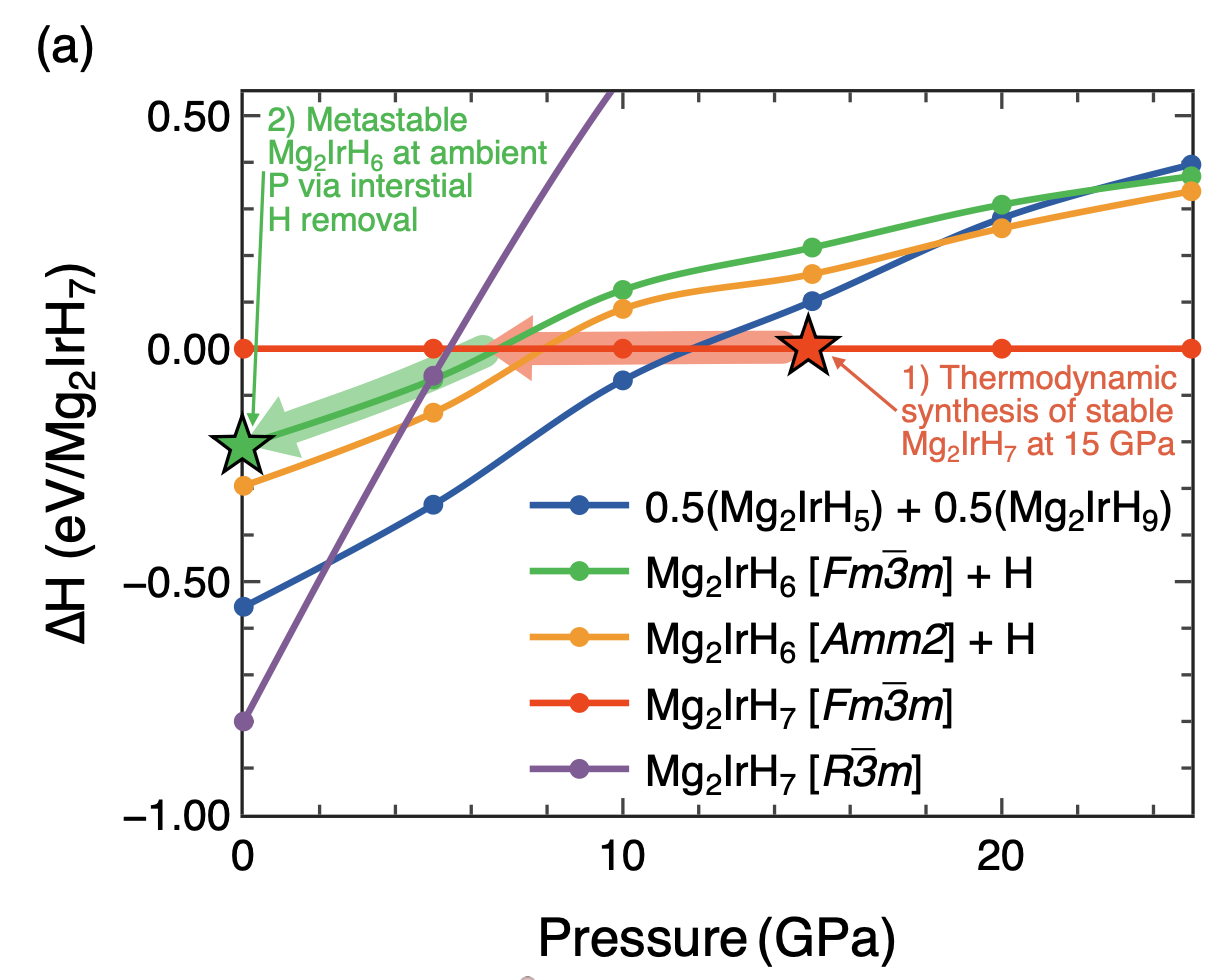
<p>Hydride superconductivity is often a story of extreme conditions, metastability, and “hidden” phases. Here, our first-principles work motivates renewed attention to the Mg–Ir–H system because of the tantalizing possibility of <strong>Mg<sub>2</sub>IrH<sub>6</sub></strong>, a metastable complex hydride predicted to host very high <em>T</em><sub>c</sub> at ambient pressure <a href="https://doi.org/10.1103/PhysRevLett.132.166001">(<strong>PRL 132</strong>, 166001)</a>.</p>

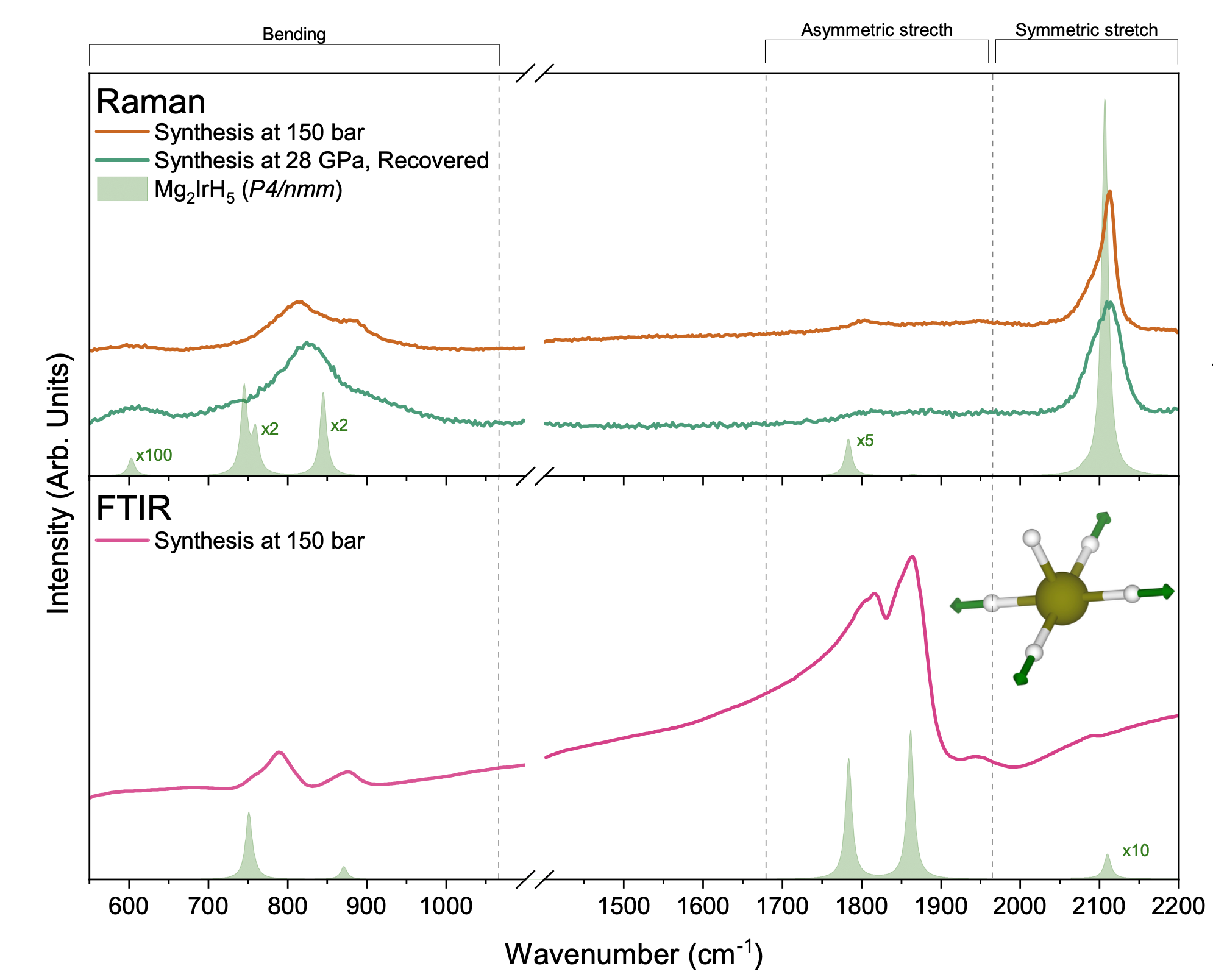
<p>The experimental team led by Tim Strobel at Carnegie then pushed the system to higher pressures and mapped what forms <em>in practice</em>. Using <strong>X-ray diffraction and Raman spectroscopy</strong>, they identify the stabilization of <strong>cubic Mg<sub>2</sub>IrH<sub>7</sub> above ~40 GPa</strong>, coexisting with a closely related hexagonal hydride near Mg<sub>2</sub>IrH<sub>5</sub>. <strong>Electrical transport</strong> shows the cubic Mg<sub>2</sub>IrH<sub>7</sub> is <strong>insulating</strong>, in line with our <em>ab initio</em> predictions, and it persists metastably upon decompression before reverting.</p>

<p>Why is this exciting, even if the stabilized phase is insulating? Because the combined picture suggests a practical strategy: <strong>two nearly identical phases in neighboring compositions</strong> can open <strong>non-equilibrium pathways</strong> to access the long-sought superconducting compound. In other words, this work turns a theoretical “promising target” into a concrete experimental roadmap.</p>

<p>Read the preprint: <strong><a href="https://arxiv.org/abs/2602.23675">arXiv:2602.23675</a></strong></p>

<h2 id="2-inverse-isotope-effect-in-srpdhd29--quantum-zero-point-motion-in-a-low-pressure-ternary-hydride-superconductor">2) Inverse isotope effect in SrPdH/D<sub>2.9</sub> — quantum zero-point motion in a low-pressure ternary hydride superconductor</h2>

<p>Preprint: <strong><a href="https://arxiv.org/abs/2602.23691">Inverse Isotope Effect in the Ternary Perovskite Hydride SrPdH/D<sub>2.9</sub>: A Signature of Quantum Zero-Point Fluctuations</a></strong></p>

<p>The second preprint highlights a complementary frontier: <strong>low-pressure ternary hydrides</strong>, where synthesis is more accessible and careful experiments can directly test predictive theory.</p>

<p>Guided by first-principles calculations, the team at Carnegie synthesized <strong>SrPdH<sub>3−x</sub></strong> at low pressure. <strong>Neutron diffraction</strong> establishes a near-stoichiometric deuterated composition <strong>SrPdD<sub>2.9(2)</sub></strong> with <strong>~96% deuterium site occupancy</strong>, enabling a clean comparison of H vs D. Subsequent <strong>transport and magnetic susceptibility</strong> measurements reveal superconducting onsets at <strong>2.1 K (H)</strong> and <strong>2.2 K (D)</strong>—an <strong>inverse isotope effect</strong>.</p>

<p>Our calculations attribute this behavior predominantly to <strong>quantum zero-point motion</strong>, underscoring a key message: in light-element superconductors, quantum nuclear effects must be taken into account when making quantitative predictions.</p>

<p>Read the preprint: <strong><a href="https://arxiv.org/abs/2602.23691">arXiv:2602.23691</a></strong></p>

<p>We look forward to feedback and discussion from the community.</p>

<p><img src="../../../assets/theme/images/SrPdH3_res_vs_T.png" width="1000" /></p>]]></content><author><name>Christoph Heil</name></author><summary type="html"><![CDATA[Two new hydride-superconductivity preprints — theory-guided discovery from high pressure to quantum nuclear effects]]></summary></entry><entry><title type="html">Two New Papers Published in ACS Journals</title><link href="https://cheil.github.io/blog/2026/new-papers-lige-laalh/" rel="alternate" type="text/html" title="Two New Papers Published in ACS Journals" /><published>2026-01-22T00:00:00+00:00</published><updated>2026-01-22T00:00:00+00:00</updated><id>https://cheil.github.io/blog/2026/new-papers_LiGe_LaAlH</id><content type="html" xml:base="https://cheil.github.io/blog/2026/new-papers-lige-laalh/"><![CDATA[<p>We are delighted to announce the publication of two exciting papers from our collaboration with experimental groups, both exploring novel materials under extreme pressure conditions.</p>

<h2 id="superconducting-lisi-and-lige-with-square-planar-nets">Superconducting LiSi and LiGe with Square Planar Nets</h2>

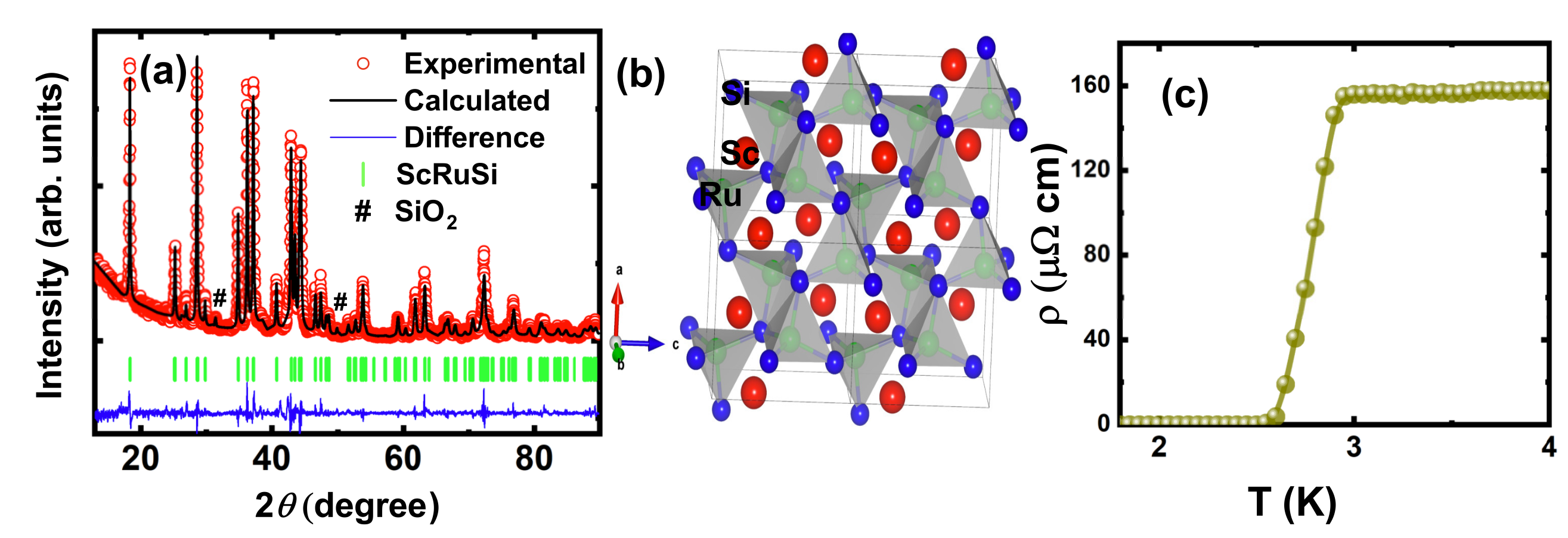
<p>The paper <a href="https://doi.org/10.1021/acs.chemmater.5c02061"><em>Superconducting high pressure forms of LiSi and LiGe featuring square planar nets</em></a>, published in <em>Chemistry of Materials</em>, reports the synthesis of novel P4/mmm phases of lithium-silicon and lithium-germanium at ~12.5 GPa. These structures feature unusual square planar nets of Si or Ge atoms—a rare geometry for group IV elements. P4/mmm-LiGe can be recovered to ambient pressure as a metastable phase and exhibits superconductivity with a critical temperature of 6.3 K, confirmed by magnetic susceptibility measurements. Our first-principles calculations predict similar behavior for LiSi (~6 K) and reveal that superconductivity originates from electron-phonon coupling in the square planar nets, representing a fundamentally different bonding motif than the three-bonded networks found in ambient-pressure phases.</p>

<h2 id="investigation-of-la-al-h-and-la-si-h-systems-at-high-pressures">Investigation of La-Al-H and La-Si-H Systems at High Pressures</h2>

<p>The second paper <a href="https://doi.org/10.1021/acs.inorgchem.5c05140"><em>Investigation of the La-Al-H and La-Si-H systems at high pressures</em></a>, published in <em>Inorganic Chemistry</em>, systematically explores lanthanum hydrides at pressures up to 20 GPa. We report the successfull synthesization of LaAlH<sub>6</sub> with rhombohedral structure containing octahedral [AlH<sub>6</sub>]<sup>-3</sup> units at remarkably low pressures (~2 GPa), much lower than initially predicted. Crystal structure prediction reveals that the La-Si-H system can form diverse hydrides: interstitial LaSiH at ambient pressure, and at 20 GPa both LaSiH<sub>2</sub> (predicted Tc ~10 K) and the semiconducting hydridosilicate LaSiH₇ with hypervalent [SiH<sub>6</sub>]<sup>2-</sup> complexes. While experiments provided evidence for LaSiH<sub>2</sub> formation, higher pressures appear necessary to fully stabilize hydrogen-rich phases.</p>

<hr />

<p>These studies demonstrate the power of high-pressure synthesis combined with advanced computational methods for discovering materials with exotic structures and promising electronic properties.</p>

<p><img src="../../../assets/theme/images/LiGe_paper.jpeg" width="1000" /></p>]]></content><author><name>[&quot;Author name&quot;]</name></author><summary type="html"><![CDATA[High-pressure synthesis reveals superconducting lithium compounds and novel lanthanum hydrides]]></summary></entry><entry><title type="html">Postdoc Position in Computational Materials Design</title><link href="https://cheil.github.io/blog/2025/postdoc-announcement-rmm/" rel="alternate" type="text/html" title="Postdoc Position in Computational Materials Design" /><published>2025-12-04T00:00:00+00:00</published><updated>2025-12-04T00:00:00+00:00</updated><id>https://cheil.github.io/blog/2025/postdoc-announcement-RMM</id><content type="html" xml:base="https://cheil.github.io/blog/2025/postdoc-announcement-rmm/"><![CDATA[<p>We are excited to announce a <strong>postdoctoral researcher position</strong> in <strong>Computational Materials Design</strong> in our group at the Institute of Theoretical and Computational Physics at TU Graz.</p>

<p>The project focuses on investigating electron-phonon coupled superconductors using machine learning techniques combined with state-of-the-art DFT and DFPT methods. The successful candidate will explore novel and application-relevant material systems, working in close collaboration with international research groups in the UK and USA. This is an excellent opportunity to join an active research environment with modern HPC resources and contribute to cutting-edge research in computational materials science.</p>

<p><strong>Who we’re looking for</strong><br />
A highly motivated researcher with a PhD in Physics or a similar field. Strong interest and experience in computational modelling of materials (DFT, DFPT) is essential, along with extensive experience employing machine learning techniques. We value candidates who are self-reliant, open to new challenges, and able to work effectively both independently and as part of a team.</p>

<p><strong>What the postdoc will involve</strong></p>
<ul>
  <li>Research and perform calculations in the field of electron-phonon mediated superconductors</li>
  <li>Employ machine learning approaches for materials discovery and characterization</li>
  <li>Collaborate with international partners in the UK and USA</li>
</ul>

<p><strong>What we offer</strong></p>
<ul>
  <li>Initial contract for 12 months, with possibility of extension</li>
  <li>Annual gross salary of at least € 69,060.59 for a fulltime position</li>
  <li>Collegial and friendly working atmosphere</li>
  <li>Flexible working schedule with possibility for home office</li>
  <li>Top research infrastructure and access to the latest technologies</li>
  <li>Exciting opportunities for professional and personal development</li>
</ul>

<p><strong>Expected start date:</strong> February 1, 2025</p>

<p><strong>How to apply</strong><br />
Candidate selection will begin in January and continue until a suitable candidate has been found. Applications must be submitted <strong>exclusively via the TU Graz job portal</strong>:<br />
<a href="https://jobs.tugraz.at/en/jobs/9b557dd5-135f-cc34-4554-691c4094e1e8">Apply here</a></p>

<p>If you have questions about the position or the research environment, feel free to get in touch.</p>

<hr />

<p><strong>Reminder:</strong> We are also still accepting applications for a PhD position on computational modeling of alloy systems. Details available <a href="https://jobs.tugraz.at/en/jobs/dbbbbb43-bcb2-7ca7-20e9-6903345d8630">here</a>.</p>

<p>— Christoph Heil</p>]]></content><author><name>Christoph Heil</name></author><summary type="html"><![CDATA[Postdoctoral position at TU Graz focusing on electron-phonon coupled superconductors]]></summary></entry></feed>